Skip to main contentSkip to footer
Skip to content
Skip to main contentSkip to footer
Skip to content 

Explore AI and Machine Learning career switch guides, beginner insights, job trends, salaries, and skills to start a successful tech career.
Key Takeaways
- Agentic AI in Recruiting shortlists candidates even before job applications begin.
- AI-powered recruitment tools now focus heavily on passive hiring and automation.
- AI-based recruitment systems filter most candidates before human review.
- Candidates must optimise profiles and skills to stay visible in AI-driven recruitment.
- Recruitment automation increases speed but also intensifies global competition.
In modern-day hiring, recruiters no longer wait for applications to come in. Instead, they rely on AI-powered recruitment tools that actively search, evaluate, and shortlist candidates before they even apply. Agentic AI in Recruiting has completely changed how companies find and shortlist talent. This shift has made AI in hiring process more advanced and competitive than ever. According to recent data, 87% of companies now use AI in recruitment, underscoring how AI in hiring has become a standard practice across industries. So, if you think sending a CV is enough, you might be behind.
Moreover, AI recruitment tools now handle everything from screening resumes to analysing skills and behaviour patterns. As a result, many candidates do not even reach the human stage of the hiring process. Therefore, candidates need to understand how AI-driven recruitment works. Let’s further explore how agentic AI shortlists candidates before applications, how recruitment automation drives passive hiring, and most importantly, how you can adapt and stay ahead in this AI-powered job market.
What is Agentic AI in Recruiting?
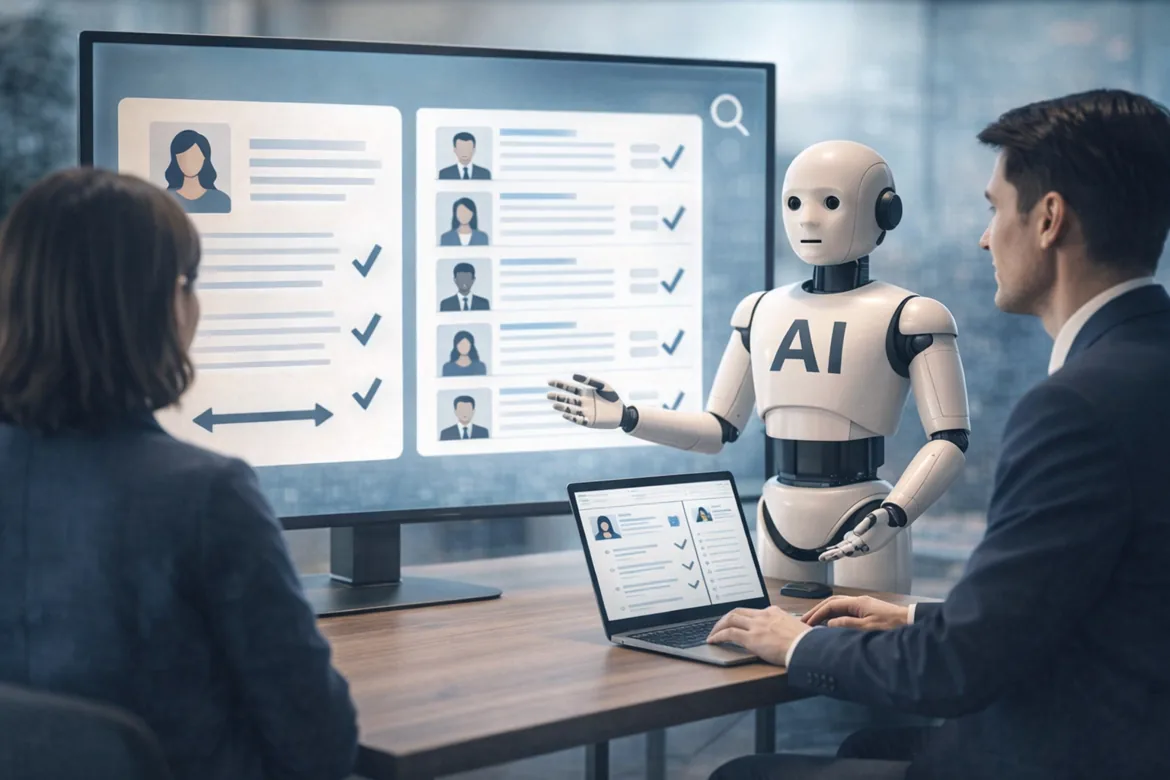
Agentic AI in recruiting represents the next evolution of AI recruitment solutions. It does not simply assist recruiters; it acts independently as a digital hiring assistant. Unlike traditional AI recruiting software, agentic AI systems perform multiple tasks without waiting for human input. They analyse data, make decisions, and complete workflows. These systems shift recruitment from reactive to proactive. Instead of waiting for job applications, they actively build candidate pipelines and shortlist top talent.
Key characteristics of agentic AI:
- Works autonomously across all hiring stages
- Sources candidates in real time from multiple platforms
- Evaluates skills and experience with intelligent analysis
- Ranks candidates using predictive insights
- Continuously learns and improves decision-making
Furthermore, AI-driven recruitment now focuses on outcomes rather than tasks. For example, instead of manually screening resumes, agentic AI ensures a ready shortlist is in place even before hiring begins.
This change improves efficiency. However, it also changes how candidates must position themselves. Because AI systems rely on data, keywords, and patterns, candidates must ensure their profiles clearly reflect their skills and achievements. In short, agentic AI in recruitment makes hiring smarter and faster. At the same time, it demands more preparation from candidates.
How AI Shortlists Candidates Before They Apply
One of the biggest changes in AI-based recruitment is early shortlisting. Candidates no longer control when they get evaluated. AI does it continuously. Instead of waiting for applications, AI recruitment tools scan professional platforms, databases, and previous hiring records to identify suitable candidates.
How this shortlisting works:
- Scans LinkedIn profiles and job databases continuously
- Analyses skills, experience, and relevant keywords
- Matches profiles against specific job requirements
- Scores candidates based on overall relevance
- Generates ranked shortlists automatically
In fact, studies show that 75% of resumes never reach a human recruiter because AI filters them first. This means your CV is no longer your first impression. Your digital footprint is. Moreover, AI hiring software does not only check resumes. It also evaluates factors such as consistency, skills alignment, and career growth patterns. As a result, even strong candidates may get filtered out if their profiles do not match AI expectations.
Therefore, candidates must stop relying only on traditional applications. Instead, they need to focus on building strong and optimised profiles that AI systems can easily identify and rank. Clearly, the hiring process has already started before you apply.
The Rise of Passive Hiring with AI
Passive hiring has grown significantly due to AI-powered recruitment, as companies no longer rely solely on active applicants. Instead, they focus on discovering talent that is not actively looking for jobs.
Why passive hiring matters:
- Most professionals do not actively apply for jobs
- AI can identify talent from large data pools
- Personalised outreach improves engagement
- Recruitment becomes faster and more efficient
Research shows that around 70% of the global workforce consists of passive candidates. This means the majority of hiring opportunities happen before candidates even apply.
Additionally, AI recruiting software sends personalised messages to potential candidates. These messages depend on skills, interests, and career goals. Therefore, candidates may receive job offers without having to search for them. However, this also creates competition. Because AI identifies top candidates globally, businesses no longer limit hiring to local talent pools.
What candidates should do:
- Keep LinkedIn updated
- Highlight achievements clearly
- Maintain professional activity online
- Stay visible in industry communities
Passive hiring proves one key thing: opportunities to find candidates who stay visible. So, if your profile does not stand out, AI might never notice you.
AI Automation in Recruitment: What Happens Behind the Scenes
Recruitment automation has transformed every stage of hiring. AI in recruitment now manages repetitive tasks and improves decision-making.
Key processes driven by AI:
- Resume parsing and keyword matching
- Candidate communication through chatbots
- Interview scheduling automation
- AI-based skill testing
- Behaviour and communication analysis
Moreover, AI supports 81% of recruiters in finding candidates and 73% in screening resumes. This shows how deeply AI hiring software integrates into recruiting workflows. Additionally, automation reduces hiring time and improves efficiency. Companies can shortlist candidates within days instead of weeks. However, this speed creates new challenges for candidates.
Challenges include:
- Increased reliance on keywords
- Reduced human judgment in the early stages
- Higher rejection rates
- Global competition for roles
Therefore, candidates must align their profiles with AI-driven recruitment systems. They should use clear language, measurable results, and relevant skills. At the same time, they should remain authentic. Because even though AI filters candidates, final hiring still involves human decisions.
How Candidates Should Adapt to Agentic AI-Driven Recruitment
Candidates must adjust their strategies to succeed in AI-powered recruitment. Old methods no longer work effectively.
Practical steps to adapt:
1. Optimise your CV
Optimise your CV by using job-specific keywords and highlighting clear results and achievements that match the role. Keep the formatting simple, so AI systems can easily scan your information without confusion. Avoid unnecessary graphics, as they can reduce readability and affect how effectively your CV gets processed.
2. Strengthen your online presence
Strengthen your online presence by regularly updating your LinkedIn profile with your latest experience and achievements. Clearly highlight your core skills so AI systems can easily recognise your strengths. Add certifications and projects to showcase your expertise and improve your visibility in AI-driven recruitment systems.
3. Improve skill relevance
Improve skill relevance by learning in-demand tools that match current industry needs and job requirements. Focus on gaining practical experience so your skills reflect real-world application rather than just theory. Showcase measurable outcomes to clearly demonstrate your impact and help AI systems recognise your value more effectively.
4. Prepare for AI assessments
Prepare for AI assessments by practising online tests to become familiar with digital evaluation formats. Improve clarity in communication so your responses stay concise and easy for AI systems to interpret. Stay confident in virtual interviews, as both AI and recruiters assess your confidence, tone, and overall presence.
5. Increase visibility
Increase your visibility by joining professional communities where you can network and stay up to date on industry trends. Share your insights and knowledge regularly to position yourself as an active and informed professional. Build a strong personal brand so both recruiters and AI systems can easily recognise your expertise and value.
Conclusion
Agentic AI in recruiting has reshaped the entire hiring process. It has moved recruitment from manual tasks to intelligent systems that act independently. Today, AI in the hiring process identifies, evaluates, and shortlists candidates before applications even come in. While this improves efficiency, it also increases competition and complexity for job seekers. Therefore, candidates must adapt quickly. They need to optimise their CVs, strengthen their online presence, and focus on relevant skills. At the same time, they must stay visible and ready for opportunities.
Moreover, using services like Fortray can significantly improve your chances. It helps you navigate AI-based recruitment. In an AI-driven hiring landscape, candidates are evaluated long before they apply. Agentic AI systems assess profiles differently across industries. Here’s how Fortray helps you optimise your visibility and get shortlisted by AI across key sectors.
Looking at today’s hiring landscape, agentic AI is already filtering and ranking candidates before applications even begin, no matter your industry. Therefore, with the right optimisation, you can ensure your profile is not just visible but also prioritised.
Take the first step towards smarter career growth today. Let Fortray help you get noticed in AI-powered recruitment.
Frequently Asked Questions
1. What is Agentic AI in Recruiting?
Agentic AI refers to advanced systems that independently manage the hiring process. It sources, screens, and shortlists candidates without needing constant human input, making recruitment faster and more data-driven. These systems also learn continuously, improving their decisions over time.
2. How does AI shortlist candidates before applying?
AI scans online profiles, databases, and previous hiring data to match skills with job requirements. It ranks candidates based on relevance and predictive insights, often building shortlists before job applications even open, which changes how candidates get noticed.
3. Why do companies use AI in recruitment?
Companies use AI recruitment tools to save time and reduce manual effort in hiring. These tools improve accuracy, speed up decision-making, and help recruiters efficiently handle large volumes of applicants through automation and smarter data analysis.
4. Can AI reject suitable candidates?
Yes, AI may overlook strong candidates if their profiles lack the right keywords or clarity. Since systems rely on structured data, incomplete or poorly optimised information can lead to rejection even if the candidate has strong potential.
5. How can candidates succeed in AI hiring?
Candidates should optimise CVs, stay active on professional platforms, and focus on relevant skills. Preparing AI-based assessments and improving visibility can significantly increase the chances of getting shortlisted in modern hiring systems.